Caring For Trees After Winter Turns to Spring
Summary: Caring for Trees After Winter means inspecting for cold damage, pruning safely, refreshing mulch, and supporting root health as the soil thaws. When you follow a simple checklist and know when to call a certified arborist, your Minnesota trees recover faster and head into spring stronger.
As snow melts and buds begin to swell, Caring for Trees After Winter moves from a “someday” task to an urgent priority. Minnesota trees have just faced months of freezing temperatures, drying winds, salt spray, and heavy snow or ice. At
Minnesota Tree Experts,
we encourage homeowners to use this transition time to spot damage, make smart pruning decisions, and give roots the support they need.
Caring for Trees After Winter: Where to Start
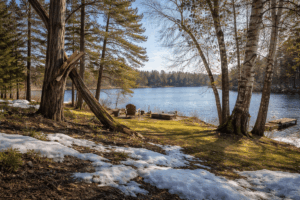
A good spring routine follows a clear order: inspect, decide what to prune now, support roots, and plan follow-up care. University and extension programs across the Midwest stress that late winter and early spring care sets the foundation for the growing season. The University of Illinois notes that late winter inspections, pruning, mulching, and monitoring are key first steps as trees leave dormancy. (extension.illinois.edu)
You can handle many visual checks yourself. For bigger decisions and high-risk trees, the
tree services
team at Minnesota Tree Experts can help you set priorities and perform the work safely.
Step 1: Inspect Trees for Winter Damage
Start with a slow walk around your yard. Look at each tree from top to bottom before you pick up tools.
- Check the crown for broken branches or areas with no buds.
- Look along the trunk for cracks, missing bark, or oozing sap.
- Examine the base for heaving soil, exposed roots, or mushrooms.
Colorado State Forest Service warns that snow-damaged trees can hide cracks in big limbs long after storms pass. Those weakened branches may fall later and create hazards. (csfs.colostate.edu)
If you see major cracks, a new lean, or large hanging limbs, avoid standing under the tree. Schedule a visit through the
Minnesota Tree Experts contact page
so a certified arborist can assess the risk.
Step 2: Prune Winter-Damaged Branches Safely
Spring is usually a good time to remove dead, diseased, or clearly broken branches. TreeStewards, a volunteer education group, notes that spring pruning should focus on hazard removal and cleanup, not aggressive reshaping. (treestewards.org)
- Cut back to the branch collar without leaving long stubs.
- Avoid “topping” trees or removing large parts of the canopy.
- For spring-flowering trees, wait to prune until after bloom.
The Arbor Day Foundation also reminds homeowners that proper pruning before and after winter storms creates stronger, more resilient trees. (arborday.org) If you are unsure about timing for oaks, elms, or other disease-sensitive species, ask
Minnesota Tree Experts
before cutting.
Step 3: Help Roots Recover from Cold and Salt
Caring for Trees After Winter includes what you cannot see: the root system. Cold, compacted, or salted soil stresses roots and slows spring growth.
The Minnesota Department of Natural Resources recommends using mulch to conserve soil moisture and protect roots, especially where winter conditions are harsh. Newly planted trees often need 15–25 gallons of water once a week during the growing season when soils are dry. (dnr.state.mn.us)
- Brush salty snow away from trunks and root zones as it melts.
- Add a 2–4 inch layer of wood chips over the root area.
- Keep mulch a few inches away from the trunk to prevent rot.
The Morton Arboretum also highlights mulch and soil moisture as key tools for helping winter-injured trees recover, especially after cold, windy seasons. (mortonarb.org)
Step 4: Understand Winter Injury on Evergreens
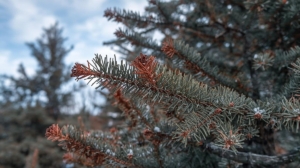
Evergreens often show winter damage differently than shade trees. Needles may turn brown on the south or west side, or whole sections may dry out.
Wisconsin Horticulture notes that many evergreens with winter burn should not be pruned immediately. They recommend waiting until mid-spring, then removing truly dead brown tissue once new growth appears. (hort.extension.wisc.edu)
During that wait, focus on watering during dry spells and maintaining mulch. If entire sections stay brown with no new buds, contact
Minnesota Tree Experts
for evaluation and a pruning plan.
Step 5: Consider Fertilizing and Long-Term Support
Not every tree needs fertilizer after winter, but stressed trees may benefit from targeted soil care. Bartlett Tree Research emphasizes that soil testing is the best way to decide what nutrients are truly needed. (bartlett.com)
Over-fertilizing can push weak, fast growth that breaks more easily. A professional arborist can interpret soil test results and suggest deep-root feeding, aeration, or compost additions that match your soil and tree species.
For many Minnesota homeowners, a long-term care plan with
Minnesota Tree Experts
combines regular inspections, structural pruning, and occasional soil care to keep trees healthier from year to year.
Real Experience: Storm Damage and Recovery
Sometimes Caring for Trees After Winter starts with a major storm, not gentle melting snow. Severe wind events and heavy ice can cause large branches to fail or entire trees to snap.
The USDA Forest Service reminds homeowners that damaged trees may still be salvageable and that certified arborists can help identify which ones to keep or remove. (usda.gov)
Here is how one Minnesota Tree Experts client described their experience after extreme winds and hurricane conditions after Minnesota Tree Experts traveled out of state to help out after weather disaster:
“Travis and Jeff quickly and professionally assessed our massive tree damage caused by hurricane-force winds. Travis walked me through the complex insurance claim process, and then the crew quickly and thoroughly managed the extensive cleanup and removal with amazing efficiency and effectiveness. Very satisfied.”
— Jeff, 5-Star Google Review
That level of communication, safe cleanup, and insurance support is central to how
Minnesota Tree Experts
approaches both emergency work and planned spring care.
FAQ: Caring for Trees After Winter

How do I know if my tree survived the winter?
Look for buds that are plump and flexible, not dry or brittle. Check small twigs by scratching the bark; living tissue should look green underneath. A thin or bare crown, dead twig tips, or brown needles can signal stress or dieback.
When should I start caring for trees after winter?
Begin as soon as snow recedes and it is safe to walk the yard. Start with a visual inspection, then schedule pruning or professional assessments before full leaf-out, when problems are easier to see.
Is it okay to prune trees immediately after winter?
Light pruning of dead or clearly broken branches is usually fine in late winter or early spring. However, avoid heavy pruning on evergreens with brown foliage until you see what recovers. Follow species-specific timing, especially for oaks and spring-blooming trees.
Should I fertilize trees in early spring?
Only fertilize when there is a clear need. A soil test is the best guide. Over-fertilizing can cause weak growth. Many healthy, established trees thrive with good mulching and watering instead of routine fertilizer.
How can I help trees stressed by road salt?
Move or dilute salty snow away from root zones when possible. Once soils thaw, water heavily to flush salt from the root area. Mulch and soil improvement can also support recovery. Severely damaged or declining trees should be evaluated by an arborist.
Ready to Help Your Trees Make the Winter-to-Spring Transition?
Caring for Trees After Winter does not have to feel overwhelming. With a simple checklist and the right help, you can move from storm scars and salt stains to healthy buds and strong new growth.
If you would like expert eyes on your trees this spring, the certified arborists at
Minnesota Tree Experts
are ready to help. Explore our
tree services,
then visit the
contact page
to schedule an inspection or spring clean-up. Together, we can help your Minnesota trees recover from winter and thrive in the seasons ahead.

Published: March 2026
Author: Jacqueline McGreevey