Should I Treat or Remove My Ash Tree in Minnesota?

Summary: ash tree removal Minnesota homeowners consider often comes down to one question: is the tree still healthy enough to justify treatment, or is removal the safer long-term choice? In many cases, healthy, valuable ash trees can be treated for emerald ash borer, while declining, brittle, or badly infested trees are better candidates for removal.
Ash tree removal for Minnesota homeowners ask about is rarely a simple yes-or-no decision. Ash trees add shade, beauty, and value, but emerald ash borer has changed how people need to manage them. Some ash trees are still good candidates for treatment. Others are already too compromised and should be removed before they become brittle and dangerous. At
Minnesota Tree Experts,
we help homeowners weigh safety, cost, tree condition, and long-term value before making that call.
Why This Question Matters So Much in Minnesota
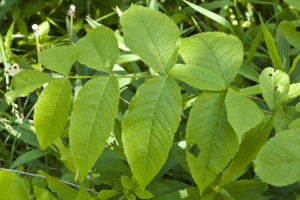
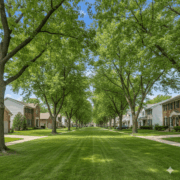
Ash trees have been a major part of Minnesota landscapes for decades. They are common in yards, neighborhoods, and community forests. That also means emerald ash borer has had a major impact across the state.
The treatment-versus-removal choice matters because both options have real costs. Treatment is not one-time. Removal often becomes more difficult and expensive if the tree declines too far. Waiting too long can limit your choices.
If you already know your ash tree looks unsafe, visit our
Tree Removal page.
If you want to learn more about insect symptoms and next steps, review our
Emerald Ash Borer page.
When Treatment Makes Sense
Treatment often makes sense when the ash tree is still healthy, structurally sound, and important to the property. That usually means the tree still has a solid canopy, limited dieback, and good overall vigor.
Homeowners often choose treatment when the tree:
- Provides major shade near the home.
- Is healthy and valuable to the landscape.
- Has limited canopy thinning.
- Has no major trunk cracks or root problems.
- Would be expensive or disruptive to replace.
Treatment is usually a long-term commitment. It is not a one-season fix. For some homeowners, that ongoing cost is worth it to preserve a mature tree that still adds beauty and function to the yard.
Ash Tree Removal Minnesota: When Removal Makes More Sense
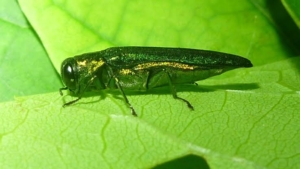
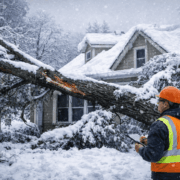
Removal is often the better choice when the tree is already declining, brittle, or structurally unsafe. In many cases, once an ash tree loses too much canopy or becomes heavily infested, treatment is less likely to be worth the investment.
Removal is often the better path when the tree:
- Has major canopy loss or heavy dieback.
- Shows trunk cracks or structural weakness.
- Has extensive bark splitting or epicormic sprouts.
- Stands near the home, driveway, or play area.
- Has become brittle or unsafe to climb.
- Was already in poor health before EAB symptoms appeared.
One of the biggest homeowner mistakes is waiting too long. Ash trees often become more dangerous and more difficult to remove as decline advances. Earlier removal can reduce risk and sometimes lower the complexity of the job.
Quick Guide: Treat or Remove?
| Condition | More Likely Treat | More Likely Remove |
|---|---|---|
| Canopy condition | Mostly full canopy with minor thinning | Heavy thinning or major dieback |
| Structure | Sound trunk and stable branches | Cracks, splits, or brittle limbs |
| Location | Valuable shade tree in a manageable setting | Hazard near house, driveway, or traffic area |
| Past health | Healthy before EAB symptoms | Already stressed or declining |
| Owner goal | Preserve tree long term | Reduce risk and future expense |
| Maintenance plan | Willing to commit to repeat treatments | Prefer one-time removal and replacement |
Helpful Signs Homeowners Should Watch For
Ash decline can move slowly at first. Many homeowners do not realize how advanced the problem is until upper branches are already dead.
Common warning signs include:
- Thinning leaves high in the canopy.
- Dead branches in the upper crown.
- Woodpecker activity on the trunk.
- Bark splitting.
- Sprouts growing from the trunk or base.
- D-shaped exit holes from emerald ash borer.
The more advanced those symptoms become, the more likely removal will be part of the conversation. If you are unsure what you are seeing, our
contact page
is the fastest place to start.
Unique and Helpful Advice for Homeowners: Saving vs. Removal

Many homeowners frame the decision emotionally, and that makes sense. Mature ash trees provide real beauty and shade. But the best decision is usually the one that balances value with safety and realism.
Treating an ash tree can make sense when the tree still has strong structure and the homeowner truly wants to preserve it. Removing an ash tree makes more sense when the tree is already declining, stands in a risky location, or would become a much harder removal later.
Another practical point is timing. If you think removal is likely, it is often better to schedule it before the tree becomes too brittle. That can make backyard access easier, reduce risk to nearby structures, and sometimes avoid a more urgent emergency job later.
Homeowners should also think about what comes next. Removal is not just about taking a tree down. It is also a chance to plan for replacement, species diversity, and a healthier future canopy in the yard.
For broader help with treatment, removal, and planning, visit our
Services Page.
Customer Experience with Minnesota Tree Experts
Clear communication and careful removals matter even more when ash trees are in tight spaces. Here is a recent 5-star Google review from a Minnesota Tree Experts customer:
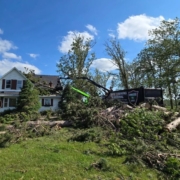
“We were very pleased with our first appointment to remove a large ash tree from our very tight backyard. They were timely, efficient, did a great job of clean up and were competitively priced. So when our 55 year old willow tree came down in high winds we called them again. It was a in a tricky spot but they were able to access all from our yard. Another company said they would have to go into two of our neighbor’s yard with the lift. Again the job was extremely well done and we were so pleased! Thank you!”
— Jerry, 5-Star Google Review
Tight-yard removals, declining ash trees, and difficult access points are exactly the kinds of situations where experience matters.
FAQ: Ash Tree Removal or Save?
Can I save my ash tree in Minnesota?
Sometimes, yes. Ash trees that are still healthy, structurally sound, and not heavily infested may be good candidates for treatment and monitoring.
When should an ash tree be removed instead of treated?
Removal usually makes more sense when the tree has major canopy loss, structural weakness, severe decline, or stands in a location where failure would create a hazard.
Is emerald ash borer treatment a one-time service?
No. Treatment is usually an ongoing commitment and must be repeated on a schedule to remain effective.
Why do dead ash trees become more dangerous over time?
As ash trees decline, the wood becomes more brittle. That makes branches and trunk sections less predictable and often makes removal harder and riskier later.
Is it cheaper to remove an ash tree early?
In many cases, yes. Early removal can reduce hazard, lower job complexity, and prevent the tree from becoming more difficult to remove after further decline.
Need Help Deciding Whether to Treat or Remove Your Ash Tree?
If your ash tree is thinning, dropping limbs, or showing emerald ash borer symptoms, now is the time to evaluate it. Waiting too long can reduce your options and increase the risk.
Minnesota Tree Experts can help you decide whether treatment or removal makes more sense for your property. Visit our
Home page,
review our
Emerald Ash Borer page,
explore our
Tree Removal page,
or reach out through our
contact page.
We can help you make a smart, safe decision before the tree becomes a bigger problem.
Published: July 2026