Do I Need a Permit to Remove a Tree in My City?

Summary: Tree Removal Rules Twin Cities MN homeowners should know often depend on where the tree stands, whether it is diseased, whether it is in the boulevard or right-of-way, and whether the city protects certain trees during development or preservation work. In many cities, routine private-yard tree removal may not need a general permit, but diseased trees, protected trees, boulevard trees, and development-related removals often trigger extra rules.
Tree Removal Rules Twin Cities MN homeowners ask about are not the same in every city. Some communities focus on diseased tree enforcement. Others regulate boulevard trees, protected trees, or removals tied to development and tree-preservation districts. At
Minnesota Tree Experts,
we know homeowners want quick, clear answers, so this guide gives a brief city-by-city starting point and a direct city link for deeper review.
One important note before you scroll: this post is a practical overview, not legal advice. City rules can change. The safest move is to confirm the current rule with your city before removing a large, diseased, protected, or boulevard tree. If you need help identifying the tree, its condition, or whether removal makes sense, visit our
Tree Removal page
or contact our team through the
contact page.
Tree Removal Rules Twin Cities MN: Quick City-by-City Guide

Blaine
- Blaine’s tree-preservation rules show up most clearly with construction and building permits. Tree protection fencing must be inspected and approved before certain building permits are issued.
- Boulevard trees in the public right-of-way are city-managed, including removal of dead or dying boulevard trees.
- City link: Blaine Tree Preservation
Brooklyn Center
- I did not find a general private-yard homeowner tree removal permit on the city pages reviewed.
- The city does regulate boulevard trees, right-of-way work, and tree contractor registration.
- If your tree is in the boulevard or the work affects the right-of-way, check with the city first.
- City link: Brooklyn Center Permits
Brooklyn Park
- Brooklyn Park treats boulevard trees as public trees and private-yard trees as the homeowner’s responsibility.
- I did not find a general private-yard permit requirement on the community forestry page reviewed.
- If the tree is in the boulevard or right-of-way, check city forestry before removal.
- City link: Brooklyn Park Community Forestry
Champlin
- Champlin’s certified tree inspector inspects public and private property for diseased trees.
- If a diseased tree is identified, the city notifies the owner and gives a removal date. If it is not removed, the city can order removal at the owner’s expense.
- City link: Champlin Tree / Weed Inspections
Columbia Heights
- Columbia Heights Urban Forestry surveys and manages communicable tree diseases on public and private property and enforces city ordinances.
- I did not find a simple general homeowner permit page for routine private removals, so this is one to verify directly with the city if disease, condemnation, or enforcement is involved.
- City link: Columbia Heights Urban Forestry
Coon Rapids
- Coon Rapids’ forestry page clearly addresses inspection requests for boulevard and city-owned trees.
- I did not find a general homeowner permit requirement for routine private-yard removal on the forestry page reviewed.
- If the tree is in the boulevard, city-owned, or part of a city forestry issue, contact the city first.
- City link: Coon Rapids Forestry Division
Crystal
- Crystal’s forestry page notes that only the property owner can authorize the city to mark a tree on private property.
- The city also notes that diseased tree removal may qualify for some grant help.
- If your concern is a diseased tree or city-marked tree, check Crystal first.
- City link: Crystal Forestry
Fridley
- I did not find a general homeowner permit requirement for routine private-tree removal on the Fridley forestry page reviewed.
- Fridley does stress utility-location rules before digging and also licenses certain tree-trimming businesses.
- If stump work, root disturbance, or contractor licensing questions apply, check with the city before work starts.
- City link: Fridley Trees and Community Forestry
Golden Valley
- Golden Valley makes property owners responsible for removing condemned diseased trees from private property.
- The city handles public trees, but owners must cut down marked private trees and dispose of all portions properly.
- City link: Golden Valley Tree Management
Maple Grove
- Maple Grove has one of the clearest special-rule situations in this service area.
- Any tree in a T Tree Preservation District, or “T-zone,” that is greater than 8 inches DBH is protected and requires City Forester approval for removal.
- Unauthorized removal can trigger replacement requirements and civil penalties.
- City link: Maple Grove Tree Care Licensing
Mounds View
- Mounds View maintains public trees and issues abatement orders for diseased trees on private property.
- The city tells residents to contact a certified arborist or forester for private-property tree concerns other than suspected diseased elm, oak, or ash trees.
- City link: Mounds View Forestry
New Brighton
- New Brighton clearly states that private ash trees infested with emerald ash borer are the property owner’s responsibility.
- If the city marks the tree for removal, the owner has 30 days to remove it or the city can remove it and assess the cost back to the property.
- City link: New Brighton Forestry
New Hope
- New Hope’s forestry page focuses on urban forestry management and links homeowners to Hennepin County’s tree removal and replacement help.
- I did not find a general homeowner private-tree removal permit requirement on the city forestry page reviewed.
- City link: New Hope Forestry
Osseo
- Osseo’s code includes tree removal regulations tied to landscape-plan and development contexts, including replacement and performance-bond language.
- For routine residential tree removal, this is a city worth verifying directly, especially if your project is tied to construction, grading, or required landscaping.
- City link: Osseo Tree Removal Regulations
Plymouth
- Plymouth has a clear permit requirement for certain trees.
- If you want to remove or significantly prune one or more Heritage or Protected Trees on private or public property, the code requires a tree removal permit.
- Hazard or disease-based removals get priority review.
- City link: Plymouth Tree Preservation and Tree Removal Code
Robbinsdale
- Robbinsdale separates public-tree rules from private-tree issues.
- The city provides a Private Tree Hazard Code Enforcement Checklist for residents dealing with private nuisance or hazard tree conflicts and reminds residents not to prune public trees themselves.
- I did not find a general homeowner permit requirement for routine private-tree removal on the private-tree page reviewed.
- City link: Robbinsdale Private Trees
What Homeowners Should Watch for Before Removing a Tree
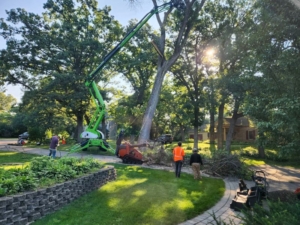
The biggest mistake homeowners make is assuming that every tree on private property can be removed without questions. In many cities, that may be true for routine yard trees. But disease orders, boulevard locations, preservation zones, heritage trees, and construction-related removals change the answer quickly.
Here are the smartest first steps:
- Confirm whether the tree is truly on private property and not in the boulevard or right-of-way.
- Check whether the city has marked the tree for disease, condemnation, or inspection.
- Ask whether the tree is protected because of heritage status, preservation overlay, or development rules.
- Document the tree with photos before removal if there is storm damage, disease, or an insurance question.
- Use a licensed and insured tree company when the work is large, near structures, or regulated.
If you are not sure where to begin, our
Services Page
and
Tree Removal page
can help you understand the practical side of safe removal before you talk with the city.
Unique and Helpful Information for Homeowners
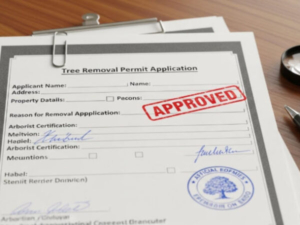
Permit questions often come up too late. A homeowner books the removal, then learns the tree was in the boulevard, was marked by the city, or was protected under a local overlay. That can create delays, replacement obligations, or fines.
Another issue is contractor choice. Some cities regulate tree contractors even when they do not clearly require a homeowner permit for every private removal. That means it is smart to ask whether your contractor is licensed where needed, insured, and familiar with local disease and boulevard rules.
For Minnesota homeowners, diseased ash, elm, and oak trees deserve extra caution. Even when a city does not require a general permit, it may still regulate removal timing, condemnation, or required action once a city inspector marks the tree. That is one reason professional evaluation matters.
Customer Experience with Minnesota Tree Experts
Clear answers and well-managed job sites matter just as much as the cutting itself. Here is a recent 5-star Google review from a Minnesota Tree Experts customer:
“2 trees cut, 2 trees trimmed in 3 hours and they did a FANTASTIC JOB! Jesse tree cutter was AWESOME, cut with precision and very methodical! Truly Amazing to watch!
The entire crew was professional and left my lawns and driveway, pristine, better than it was before they arrived! Great job cleaning up! Mike the estimator and Foreman managed to get the job done on the day I absolutely needed to have it done, as busy as they are!
No sense in getting estimates from others they were in the same ball park & the quality and level of service was second to none!”
— DiDi, 5-Star Google Review
When homeowners are already juggling city questions, having a professional crew that communicates clearly can make the entire process much easier.
FAQ: Tree Removal Rules Twin Cities MN
Do I always need a permit to remove a tree on my own property?
No. In many cities, routine private-yard tree removal may not require a general permit. However, that answer changes fast if the tree is diseased, city-marked, in the boulevard, in a protected district, or tied to development rules.
What if the tree is in the boulevard or right-of-way?
Treat that as a city question first. Boulevard trees are often public trees, and many cities regulate planting, pruning, or removal there much more closely than work inside the private yard.
What is the biggest permit hotspot in this service area?
Plymouth and Maple Grove stand out. Plymouth regulates Heritage and Protected Trees with a permit process, and Maple Grove requires approval for certain protected trees in T-zones.
What happens if the city marks a diseased tree?
In several cities, once a tree is officially marked or condemned, the owner must remove it within the stated deadline or the city can step in and assess the cost back to the property.
Should I check with the city before scheduling removal?
Yes, especially if the tree is large, diseased, near the street, part of a construction project, or in a city with known protected-tree rules. A five-minute city call can save a much bigger headache later.
Need Help Sorting Out the Tree and the Rules?
Tree rules can feel confusing because the answer changes by city, by tree location, and by tree condition. The good news is that you do not have to sort all of that out alone.
If you need help identifying whether a tree looks diseased, hazardous, or ready for removal, Minnesota Tree Experts is here to help. Visit our
Home page,
review our
Tree Removal page,
explore our
Services Page,
or reach out through our
contact page.
We can help you understand the tree side of the decision before you move forward.
Published: June 2026
Author: Jacqueline McGreevey