What Happens If I Never Prune My Trees?

Neglecting tree pruning can allow dead limbs, weak branch unions, crossing branches, and excessive growth to become larger problems. Over time, an unpruned tree may face greater storm damage, property conflicts, disease concerns, and costly corrective work. Regular, selective pruning helps Minnesota trees develop safer structure while preserving their natural form.
Neglecting tree pruning may not create an obvious problem right away. Trees continue growing, leaves return, and the canopy may still look full. However, weak branches, deadwood, and structural defects can worsen quietly over time. At
Minnesota Tree Experts,
we help homeowners address those concerns before they become dangerous or expensive.
Why Trees Need Selective Pruning
Forest trees naturally lose limbs and compete for light. Residential trees grow in a very different setting. They stand near homes, driveways, sidewalks, fences, and utility areas.
Pruning helps trees fit those surroundings without sacrificing their natural form. It can remove dead branches, improve structure, create clearance, and reduce specific risks.
The
University of Minnesota Extension pruning guide
describes pruning as preventive maintenance. Correct pruning during a tree’s formative years may prevent many future problems.
That does not mean every tree needs heavy annual cutting. The goal is targeted care based on species, age, condition, and location.
What Can Happen When You Never Prune Your Trees?
Dead Branches Can Become Falling Hazards
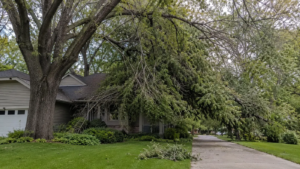
Trees naturally develop dead branches. Drought, insects, disease, shade, and storm damage can increase the amount of deadwood.
Small dead twigs may create little risk. Large dead branches over a driveway, patio, or roof deserve attention. They can fall during wind, ice, or heavy snow.
The International Society of Arboriculture lists dead-branch removal as a common reason for pruning mature trees. Its
Pruning Mature Trees guide
also explains how proper pruning can improve form and reduce risk.
Weak Branch Unions Can Grow More Dangerous
Young trees sometimes develop two competing main stems. These codominant stems may form a narrow, weak attachment.
As both stems grow, they become heavier and catch more wind. Snow and ice add even more force. A problem that needed a small cut years ago may later involve two large leaders.
Early structural pruning can guide a tree toward stronger development. Waiting often makes corrective work more difficult and less predictable.
Crossing Branches Can Damage Each Other
Branches that rub together repeatedly can wear away bark. That damage exposes living tissue and creates unnecessary wounds.
Selective pruning removes the weaker or less desirable branch before both limbs become large. Without intervention, the rubbing may continue for years.
Overgrown Limbs Can Reach Structures
Trees do not recognize rooflines, fences, or property plans. A well-placed young tree can eventually spread over structures and access areas.
Branches may scrape siding, block lighting, hang over vehicles, or reduce walkway clearance. Preventive trimming usually requires smaller cuts than delayed corrective work.
Homeowners dealing with clearance concerns can learn more on the
Minnesota Tree Experts Tree Trimming page.
The Canopy May Become Unbalanced
Storm loss, uneven sunlight, and competition can create an unbalanced canopy. One side may carry more weight or extend farther than the other.
An uneven crown does not automatically make a tree dangerous. However, excessive weight on long or poorly attached branches can increase stress.
Professional pruning may reduce specific limbs while preserving enough foliage for healthy growth.
Neglecting Tree Pruning Can Increase Storm Concerns
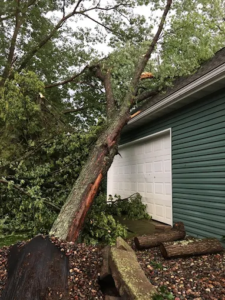
Minnesota trees face high winds, thunderstorms, wet snow, and ice. Those conditions reveal structural defects that may have developed for years.
Proper pruning cannot make a tree storm-proof. It can, however, remove deadwood and improve weak structure before severe weather arrives.
The
Arbor Day Foundation pruning resource
explains that pruning supports strong structure and can reduce the likelihood of damage during severe weather.
Delayed care often becomes emergency work. Emergency work may involve fallen limbs, blocked access, roof damage, or unstable branches under tension.
Pruned Trees vs. Neglected Trees: Quick Comparison
| Tree-Care Issue | With Selective Pruning | When Pruning Is Neglected |
|---|---|---|
| Dead branches | Removed before they become larger hazards | Remain in the canopy and may fall |
| Young tree structure | Competing leaders can be corrected early | Weak unions grow larger and heavier |
| Roof and driveway clearance | Growth is managed with smaller cuts | Large limbs may require major reduction |
| Crossing branches | Rubbing limbs are corrected early | Bark damage and wounds may develop |
| Storm preparation | Known deadwood and defects are addressed | Weak areas remain until weather exposes them |
| Long-term cost | Periodic, targeted maintenance | More complex corrective or emergency work |
Does an Unpruned Tree Become Unhealthy?
Not every unpruned tree becomes unhealthy. Many trees grow for years with little intervention. Pruning should never become cutting for its own sake.
The concern is that residential trees often develop conditions that need management. These may include dead branches, damaged limbs, poor attachments, or conflicts with structures.
Pruning does not cure root decay, soil compaction, drought stress, or every tree disease. It is one part of a broader tree-care plan.
The
Minnesota Tree Experts Services Page
provides information about trimming, removal, storm response, stump work, and other tree-care needs.
Why Early Pruning Often Costs Less Than Delayed Correction
Small branches are easier to remove than large limbs. Smaller cuts also create smaller wounds and allow more flexibility when shaping structure.
A young tree with competing leaders may need one carefully selected branch removed. Years later, both leaders may be large and extend over important areas.
Delayed pruning may require specialized equipment, rigging, traffic control, or greater property protection. That added complexity can increase the cost.
Early care also gives homeowners more choices. Waiting until a limb breaks or a tree declines can limit the available solutions.
Can Too Much Pruning Also Harm a Tree?
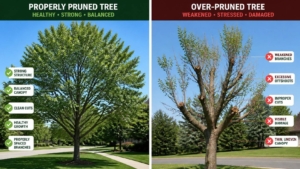
Yes. Neglect is not healthy, but excessive pruning is not the answer. Leaves create the energy that supports growth, defense, and recovery.
Removing too much live canopy can stress a tree and trigger dense, weak regrowth. Mature trees often need conservative, goal-based pruning rather than dramatic reshaping.
Topping is especially harmful. Topping removes large branches without respecting the tree’s structure. It creates major wounds and encourages weakly attached shoots.
The ISA resource
Why Topping Hurts Trees
explains why proper pruning cuts are preferable to indiscriminate branch removal.
How Often Should Minnesota Trees Be Pruned?
Trees do not follow one universal pruning schedule. Frequency depends on species, growth rate, age, location, and condition.
Young trees may benefit from periodic structural pruning. Mature trees often need occasional inspections and targeted care rather than yearly cutting.
A tree near a roof or driveway may need more frequent attention. A well-structured tree in an open yard may need less.
Major storms can also change the schedule. Inspect trees after high winds, heavy snow, or ice, even if they were pruned recently.
When Is the Best Time to Prune Trees in Minnesota?
Late winter is an excellent pruning window for many Minnesota trees. Bare branches reveal structure, and many insects and disease organisms are less active.
University of Minnesota Extension explains that dormant pruning can reduce plant stress and disease risk. Its
winter pruning guidance
also notes that crossing branches and deadwood are easier to see without leaves.
Timing still varies by species. Oaks, flowering trees, evergreens, and fruit trees may require different schedules. Dead or dangerous branches should be addressed when safety demands it.
Unique Pruning Advice for Minnesota Homeowners
Start by describing the problem rather than deciding how much should be cut. Tell the tree professional about roof contact, falling branches, poor clearance, or storm concerns.
Ask what will happen if the work is delayed for another year. This question helps separate cosmetic preferences from genuine structural concerns.
Also ask how the tree should look several years after pruning. Good pruning plans for future growth instead of creating a temporary shape.
Finally, combine pruning with inspections. The most important problem may not be the most visible branch. An arborist may notice root issues, decay, or weak unions that change the recommendation.
Customer Experience with Minnesota Tree Experts
Professional tree care should include careful work, fair communication, and thorough cleanup. Here is a recent 5-star Google review from a Minnesota Tree Experts customer:
“Great price — The entire crew was polite, professional, efficient and friendly and those are just a few words to describe the MN Tree Experts! A few neighbors stopped by to watch them in action and asked for their business card because way better priced than other estimates we received. We highly recommend them and cannot say enough about the great job they did. Thanks again guys for going above and beyond this morning. You are awesome!”
— Susan, 5-Star Google Review
Services: Tree stump grinding, Tree stump removal, Tree trimming & pruning, Tree removal
Whether a property needs targeted pruning or several tree services, an organized crew can make a large project feel manageable.
FAQ: Neglecting Tree Pruning

What happens if I never prune my trees?
Dead branches, weak unions, crossing limbs, and clearance conflicts may become worse over time. Some trees remain healthy, but delayed maintenance can make future work more complex.
Can an unpruned tree become dangerous?
Yes. Large dead branches, weak attachments, and storm-damaged limbs can create hazards. Risk depends on the defect and what the tree could hit if a branch fails.
Does every tree need to be pruned every year?
No. Many mature trees need periodic inspections and targeted pruning rather than annual cutting. The schedule should reflect the tree’s species, age, condition, and location.
Can I prune a neglected tree all at once?
Usually, major corrective work should be conservative. Removing too much live canopy at once can stress the tree. Some neglected trees benefit from a phased plan over several seasons.
When should I hire a professional for tree pruning?
Hire a professional when branches are large, elevated, storm-damaged, or close to structures and utility lines. Professional help is also important when decay or structural weakness may be present.
Has Tree Pruning Been Overlooked on Your Property?
Neglecting tree pruning can turn small structural concerns into larger and more expensive problems. A professional inspection can clarify which trees need work now and which can safely wait.
Learn more about Minnesota Tree Experts on our
Home page.
Review professional pruning options on our
Tree Trimming page,
or explore additional support through our
Services Page.
When you are ready, use our
contact page
to request an estimate and build a practical plan for your trees.

Published: August 2026